2014-12-26

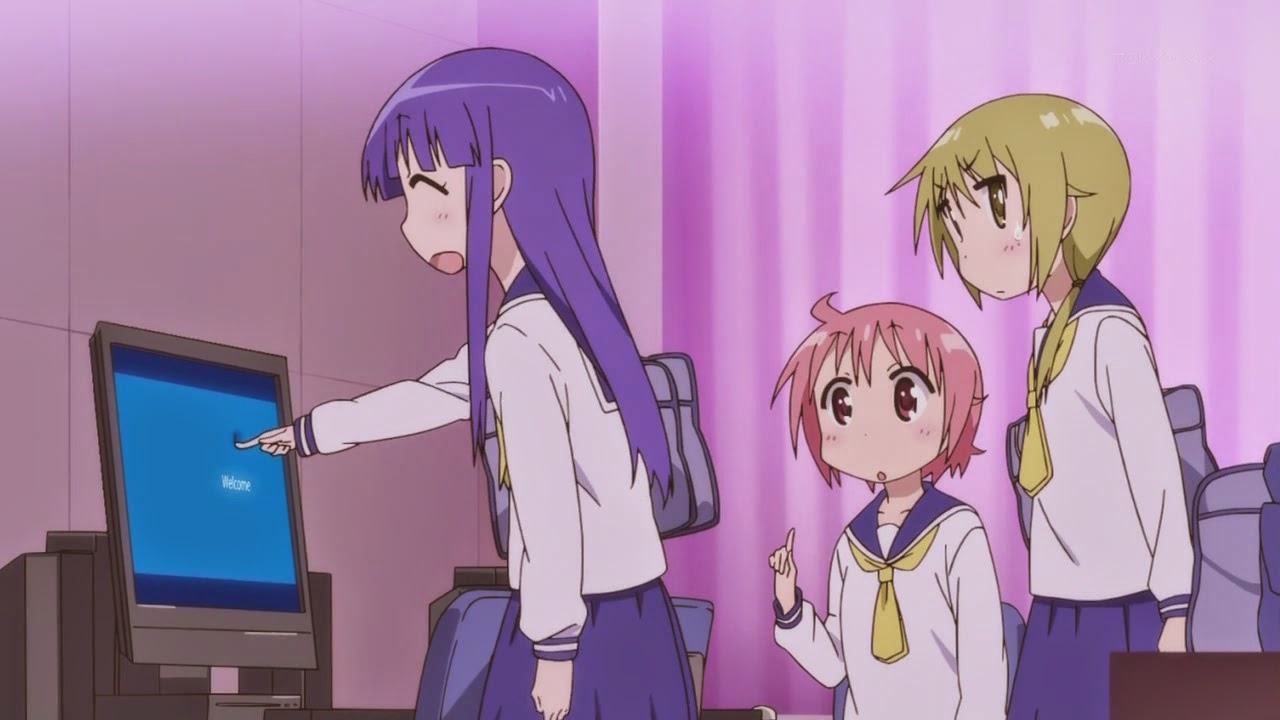
I Can't Understand What My Husband Is Saying

I Can't Understand What My Husband Is Saying (旦那が何を言っているかわからない件) is a 13 episode slice of life comedy based on the 4koma of the same name by Cool Kyoshinja.  This 2 minute per episode show originally aired in Japan during the Fall of 2014

    Hajime is a deep otaku who makes a living running a blog.  The stars align and he ends up marrying a normal girl named Kaoru.  The show follows them as they adjust to their new life together.  Kaoru loves her husband, but his habits and conversation references sometimes leaves her scratching her head in wonder.  Hajime continues to wonder at his luck in getting a normal woman to marry him.

    This show was a hidden gem of the Fall season.  Its crudely drawn and sometimes disjointed but over all was an enjoyable and heart warming series.  Much of it is filled with Kaoru being exposed to the various peculiar hobbies and fascinations in the otaku world.  Each new perverted thing she learns about makes her more confused but she never question her love for Hajime.  Over the first half of the show, as they are introducing all of the peripheral characters, there is sometimes confusion as to who is who and what their relationship with the main characters are.  I'm sure if this was watched in one sitting it wouldn't be as confusing.  The second half of the show starts to shape up and point the narrative in the direction of the couple contemplating having a child.  This half also has some serious and striking retrospectives, which change the tone of the show a little and give it some dimension.  Over all the series as a whole is much better than anticipated.  The crude artwork does fit in well with the shows flavor and the main characters are enjoyable.  I should probably re-watch it in one sitting and see what the impression is over watching it each week.  Watch out for Evangelion references in the final episode and a jab at the pregnancy test meme.

    The manga-ka runs a website for it where rough panels are hosted of the series.  Check it out if you can read Japanese.  A second season was green-lit and will begin in April of 2015.  There is word it will be a full length series but I am not sure how well that will work out.  It seemed to flow nicely in the shortened episode length.  A full 20 minutes may very well lead to useless filler material, detracting from the main part of the story.

    The show was simulcast on Crunchyroll.  Highly doubtful it will see a DVD release and the manga is not available as well in North America.

2014-12-24

A Retrospective on Slice of Life Anime & Manga - Part 1

As I have gotten older I have found myself gravitating more and more to anime and manga that would fit into the category of slice of life.  This can be and is a rather vague category.  It essentially means a story that is based entirely in the real world and is void of anything fantastical.  The characters are normal (if sometimes eccentric) people who live relatively ordinary lives.

    There are a few things that draw me to these stories.  Many times they are comedies.  There's also a voyeurism aspect to it.  It's fun to watch/read them to transport you into a different, plausible, life.  (OK so I guess sometimes I may fantasize and escape too!)  Many stories could be considered slice of life, particularly the myriad romance titles out there.  I'm going to focus on three slice of life styles.  The ones that are really about mundane life, the ones that focus on cutesy characters, loli-troupe comedy I guess you could call it.  And then the general comedy slice of life series.

General Slice of Life

Bakuman: Two students decide to take on the manga world by storm, striving to be the world’s best manga artist/author.  Along the way to their dream, they have to deal with the grueling daily life in the manga industry.

    From the creators of Death Note, this series shows in excruciating detail what it’s like to work in the manga industry.  The insane hours you’re subject to, the deadline and sales pressures.  The psychology behind creating the standard shonen manga.  It’s quite insightful into the behind the scenes of the industry, most specifically what it takes to create something like Dragon Ball and Naruto.  The manga is incredibly dense and wordy, almost like a novel.  I have not seen the anime and don't feel I need to after reading the manga.

 
Barakamon: After punching an elderly gallery curator, a young professional calligrapher is forced to spend time in a remote village.  The goal is to make him realize his place in life and to help him focus on his work instead of what he expects.  The town is filled with down to earth folks who dispense nuggets of wisdom to this city boy in unexpected ways.

    This is a smartly drawn and fun series that doesn't actually come up with anything new.  The characters are what make this show, especially the misfit girl Naru.  The plot course is predictable and worn out but it’s still worth watching for some laughs and light hearted fun.


 Genshiken: This long running manga/anime follows the daily exploits of a college otaku club.

    This is a fun poke/homage at otaku in general.  The club is a ragtag band of otaku misfits who have nowhere else to fit in.  The best thing about this series is that it evolves as it goes on.  Members come and go as time passes and with it the exploits of the club changes too.  This is a great introduction to new otaku to the world of anime/manga fandom.  It’s a crash course to the various otaku subgroups.  I always hope for more stories from this series.


Hanasaku Iroha: A semi-responsible girl is abandoned by her single mother and has to go live/work at her grandmothers’ traditional inn.  Life at the inn, under her grandmother draconian rules, is hard but might help the girl to become a stronger person.

    This is a series that made me glad I had a good upbringing.  The main character ends up having to deal with some hard family issues.  Between her irresponsible mother and her hard-nosed grandmother, she finds herself being the punching bag between both women's issues with each other.  The story its self is fairly light and mildly comical though, even if it deals with some heavy issues.  There are moments in it where the main characters tenacity and ability to solve all of the problems can be a little overbearing though.


 Hourou Musuko: Being an adolescent can be hard, but when you have to figure out how to identify your gender and your sexual preference on top of that, life can become oppressive.  This story deals with a small group of middle school students who are dealing with gender identification and self identity questions.

    This is an excellent and highly enjoyable drama about defining who you are as you begin to enter adulthood.  The two main characters share the same problems but also have to deal with underlying emotional issues between themselves.  Their small group of friends has to deal with the spillover from their hang ups as well as their own issues.  I would highly recommend this for kids just entering their teenage years as a way to help them understand that they are not alone in the world being confusing all of a sudden.  It also serves as a way to teach tolerance and acceptance of those who are different from you.


Kids on the Slope: Set in the 60's, 3 high school students become friends through the bond of jazz music.

    This was a well done short series giving a peek into life in Japan post reconstruction.  It is also a fantastic primer for great free form jazz.  The ending is a bit weird and somewhat of a letdown, but don't let that stop you from enjoying this serious coming of age story.
 

Peeping Life: A long series of shorts depicting various real life and sometimes historical fiction settings.

    This web series by CoMix Wave depicts banal real life situations with dry wit.  The artwork is shoddy motion capture CG and is set to make the viewer feel like a voyeur.  It's entertaining if you like dry wit and daily oddity.  It’s also a welcomed break in the anime world from the standard voice acting.  The cast in these shorts speak as normal people do, often times on top of each other. 


34-sei Mushoku-san: The daily non-adventures of an unemployed 34 year old single woman.

    I only just started reading this enjoyable manga by the author of Sasameki Koto.  The art is realistic and enjoyable in its little details.  The main character, which has no name, carries on mental conversations about her dreams, ambitions and daily task check list in an entertaining way.  After a while you start to see why people who live alone for long periods of time develop the habit of talking aloud to no one.

 
Servant x Service: A comical look at semi-outrageous lives of employees at a local ward office.  These civil servants have to deal with the insane demands of the public and the ruts their lives turn into.

    This one is semi-romance, semi-off beat and actually pretty enjoyable. Who would have thought the prestigious career of civil service could be filled with so many weirdo's?
 

Shirobako: The hard life of people who work in the anime industry.

    This is like the shojo version of Bakuman but for anime instead of manga.  Some of the side characters are based on real life people too, which is pretty cool.


 Summer Wars: Math wizard Kenji is wrangled into pretending to be a classmate’s boyfriend for her grandmother’s 90th birthday party.  The weekend at the countryside estate is more than anyone bargained for when the internets' hub for interpersonal interaction is hacked and all roads lead back to Kenji and his classmate’s estranged uncle.

    While not my favorite movie by Hosoda Mamoru, this is a well done comedy/drama that deals with the love of family and personal responsibility.

 
Uchuu Kyodai: Set in the future this slice of life drama deals with two brothers reaching and attempting to reach their childhood goal of becoming astronauts.

    While set a few decades into the future this series sticks with reality.  It hyper-focuses on the grueling selection process for becoming an astronaut.  This is a highly addicting, almost drug like, show that keeps you rooting for the main leads and enjoying the agonizing progress of their journey.  After 99 episodes I am holding my breath waiting for the manga to get more material under its belt for the series to return.


 Usagi Drop: A single man ends up adopting his grandfathers’ illegitimate 6 year old daughter to keep her from being abandoned.  He has to figure out how to raise a little girl when he isn't even very responsible for himself.

     This is one of my favorite slice of life series.  The artwork is a bit odd but the characters and story are incredibly believable and endearing.  The anime only covers the first half of the manga.  The
second half of the manga takes place 10 years later and things start to get a little...strange.


World Fool News: A news caster is given a co-hosting role for the stations most undesirable program, World Fool News.  He has to learn to adjust to the assignment and he bizarre co-workers.

    Another motion capture CG slice of life series by CoMix Wave, this one, as opposed to Peeping Life, has a plot and a purpose.  But it still shares the dry wit slice of everyday life scenarios as the other show.


Yotsuba&!: The story of a strange little girl and her experiences with everyday things.

    This is the manga that the creator of Azumanga Daiou has been busying himself with since that series finished.  Sadly, this one will never see an animated version.  Regardless, the cute everyday adventures of the title character and her interesting perspective on reality are fun to read again and again.


Loli-troupe Slice of Life

Azumanga Daiou: A 10 year old genius enters high school and has goofy adventures with a small group of classmates.

    This is my favorite TV anime of all time.  Its humorous, endearing and all around fun.  The characters and antics are highly entertaining, sometimes leading to realms of bizarre hallucination.


Hyakko: A group of 4 girls at a private high school ended up bonding together through mutual discomfort in their surroundings.  They band together for over the top escapades in their school while surrounded by a large cast of goof ball peers and teachers.

    This one is middle of the road and far from original.  It plays off of much of the groundwork laid by Azumanga Daioh and meshes it a little with the frantic insanity of Pani Poni Dash.  It has memorable moments but don't make it a first pick for series to watch.


Ichigo Mashimaro: Innocent and comically cute exploits of 4 elementary school girls and one of their adult sisters.

    This is a fun and sweet slice of live show, probably the ideal loli-troupe slice of life show in my mind.  Its innocent, goofy but realistic and endearing without being sappy.  The world these girls live in is simple and oblivious to the dangers of the adult world.

 
Lucky Star: Ruckus high school girls who go through their final days of childhood slacking off and having fun.

    This is the opposite of Ichigo Mashimaro, the characters in it are jaded and familiar with the ways of the adult world.  The troupe is lead by one of the queens of the otaku, whose main ambition is to slack of and fuel her hobbies.  Highly frantic and entertaining in many ways!

 
Mangirl!: 4 women in a large publishing company decide to produce their own monthly manga magazine.  This show glosses over their efforts for the first year of its publication.

    I wouldn't be surprised if this was directly based on real people, the manga is actually about a real magazine so its highly likely.  This is a good overview of the difficulties and time required to work in the manga industry.  Short, goofy and enjoyable.


Minami-ke: The Minami sisters are self sufficient orphans.  The series follows their semi-mundane lives filled with the love and friendship of their classmates.

    This semi long running anime saw a few disruptions in its production that unfortunately made for some boring episodes.  The original series was entertaining and well paced but the following 3 series' weren't able to deliver in the same way.  Regardless, this is still a fun show and the characters a loveable and memorable.


Yuyushiki: 3 close friends try to establish their own club in school to not feel left out.  The club ends up being nothing but them randomly surfing the internet and obsessing about bizarre and unrelated things.

    Another tepid entry into the loli-troupe shows.  This one had moments of humor but was ultimately bland and unoriginal.


Comedy Slice of Life

 
Danna ga Nani wo Itteiru ka Wakaranai: The sweet and goofy story of an odd couple; a normal working woman and her semi-pro blogger otaku husband.  The series of shorts detail the wife’s introduction to the more hidden aspects of otaku culture and they try to reconcile their differences amidst their love for one another.

   This short series is crudely drawn and somewhat disjointed in its story telling, but it has some open honesty and tenderness to it that work well with the odd ball personalities.


 Denki-gai Honya: This show is about caricatures of employees in an Akihabara manga shop.  They all have their perversions and obsessions and they just go about their lives working and hobbying, while trying to gather up the courage to confess to their crushes.

    Ruckus and perverted, this was a fun little show that took the otaku out of the schools and put them in the work place.  More of a comedy than a slice of life series this one had some good moments.

 
Gekkan Shojo Nozaki-kun: A girl with a crush on her classmate ends up having to help him with his monthly romance manga.  She agrees as a way to spend more time with him, even though he has no idea about her feelings.

    This was a fun and entertaining slice of life comedy that masqueraded as a romance but barely let it get in the way of the gags.  It was like a more grounded School Rumble.

 
Kyo no Go no Ni: From the creator of Minami-ke, this somewhat perverted series details the less than innocent escapades of 5th graders.

    This series puts elementary school students in innocent but adult situations for hilarious results.  The humor is done in a way that adults would generally understand the discomfort with many of the situations, but children would not.  I wouldn't however recommend this for anyone under high school age.  There is no nudity but the situations are mature enough.

 
Mainichi Kaa-san: The main character of this odd gag manga is a manga artist struggling to meet her deadlines, keep her kids safe and happy and find time for her own relaxation.  This series was based on the long running gag strip in Mainichi Shinbun.

    This is a fun and crudely drawn series that shows some pretty realistic scenarios in odd ball ways.  Just the way I like it.  Every once and a while there will be a segment of beauty and emotion as the main character goes on dream like journeys of dream like self reflection.  These moments are beautiful and haunting and really juxtapose the rest of the crazed segments of the show.  The scenarios are semi-autobiographical and the manga's creator, Saibara Reiko, has lived a public life fueled with alcoholism, depression and a troubling childhood.


Poyopoyo Kansatsu Nikki: This is a series of shorts about a rural family and their newly adopted cat.  The cat is a big fat ball of fuzz that inspires affection and attention from human and animal alike.

    This series is based on a gag manga and is animated to keep that feel.  The cartoonish character designs and frequent use of SD add to the comedy in this entertaining show.


 Tonari no Seki-kun: Yokoi is obsessed with the boy who sits next to her in class, Seki.  Seki wiles away his time in class with elaborate hobbies and activities.  Yokoi is half fascinated by his level of creativity and half concerned for him getting into trouble. 

    This poorly drawn short series is highly entertaining.  Seki's extracurricular activities to help him ignore his teachers are entertaining.  The show is narrated by Yokoi's internal dialogue as the frets and wonders over her neighbors antics.


Yurumates3D: odd ball daily exploits of the residents of a rundown boarding house.  The characters do what they can to slack off and pass away their time wondering about absurd things.

    This is a crudely drawn super deform comedy that was enjoyable for its aired length, but I couldn't see it working as a full length show.

  
Watamote: When a fujoshi wants to come out of her dark and secret existence she has to figure out ways to interact with people normally.  It’s difficult for her though as she is incredibly socially awkward and expects too much of reality to be like her favorite eroge titles.

    This was a disjointed combination of NHK ni Yokoso and Yamato Nadeshiko Shichi Henge.  It didn't totally work but there were some pretty funny moments even if much of the comedic routines have been done better in other series'.

2014-12-23

When Supernatural Battles Became Commonplace

When Supernatural Battles Became Commonplace (異能バトルは日常系のなかで) is a 12 episode super natural comedy based on the light novel series by Nozomi Kota.  The series originally aired in Japan during the Fall of 2014.

    One day the members of a high school literature club suddenly gain mysterious super powers.  Six months later their lives are still uneventful and boring, as if nothing special happened to them.  The only male member of the club, Ando Jurai, is a chuunibyo.  He has taken it upon himself to prepare the club members for epic supernatural battles with the fate of justice and the world at stake.  Instead of having to fight enemy forces with their powers they have to work at hiding their abilities and deal with normal high school relationship issues.  Meanwhile, unknown to them, there is actually a supernatural conflict going on.  They exist just on the outskirts of that battle and are mostly unaware of it, only getting slightly involved in it near the end of the show.  Otherwise, they go about their days as normal kids do...propelled by Ando's over active imagination, which is actually more in tune with the world around them than anyone realizes.

    This was actually a decent show, especially since they really didn't get involved in any super natural conflicts, facing off against escalating enemies, like Ando anticipated/lusted for.  This series taught me the definition of chuunibyo, which is something I am a ashamed I didn't know before.  It perfectly sums up the target audience for all of the shonen fight series' like DBZ and Naruto.  For those who don't know, its a term used for people who act like an over active middle school boy.  Someone who obsesses about shonen battle manga type scenarios.  Coming up with crazed Engrish catch phrases, acting out over the top battle sequences, generally living in a world of fantasy where they are a hero of justice battling against power forces.  Its a good thing to know and understand!  The series did a good job of keeping you entertained and when it seemed like it was going to devolve into a super power slug fest normalcy comes out of left field to derail those plans.  Near the end it gets close to going in the chuunibyo direction but it never really ended up that way.  There is a tense final conflict that doesn't really let the main characters know anything about the real supernatural battle taking place.  There is even a harem false flag that pops up in the second half and doesn't really get anywhere either.  That said the artwork is standard fair, with a small amount of fan service.  The characters are decently developed but fit into standard anime troupes.  The pace worked out well and it was just the right length to not get annoying.  Not a great anime but good and done well.  I got exactly what I wanted out of this; characters who could be experiencing the fantastical but ultimately lived normal lives with only their over active imaginations to keep them on their toes.

    The series was simulcast on Crunchyroll and there is no word on any North America disc release.  I am unaware of the light novels being available in North America either.


Ookami Shojo to Kuro Ooji

Ookami Shojo to Kuro Ooji (オオカミ少女と黒王子) is a 12 episode romantic comedy based on the manga of the same name by Hatta Ayuko.  The anime originally aired in Japan during the Fall of 2014.

    Erika has problems with embellishing the truth.  She has an uncontrollable habit of trying to impress others by lying about her self.  It typically ends up back firing on her, resulting in her only having one real friend.  She decides to try to change that in high school and joins with two of her classmates to be their friend.  The classmates have older boyfriends and go on and on about their relationships.  Not wanting to be outdone Erika lies about having a boyfriend of her own.  Soon though the other girls start to doubt her.  In desperation she takes a picture of a hansom boy on the streets one day only to discover its the most sought after boy in their school when she shows it off.  Kyouya is the boy everyone is after; smart, kind and hansom.  Yet no one has been able to grab his attention.  Erika's classroom friends call her out on her lie.  Desperate to maintain the rouse, Erika asks him to play along with her, which he surprisingly does.  The agreement comes with some consequences though as Kyouya is anything by the kind and accepting person everyone thinks he is.  Underneath he is cruel, spiteful and uncaring towards anyone else.  He sees this situation as a way to toy with Erika who he thinks of as his pet dog to do with what he may.  Erika finds her self in a less than desirable situation.  She has her fake boyfriend but at the same time she has to deal with his every demand and controlling behavior.  As the negative relationship persists she finds herself falling in love with the sadist Kyouya.

    This series pushed many of my feminist buttons and made me start to hate the way women in Japan are treated in general.  Kyouya is a severe asshole and does some pretty damaging things to Erika who is so vulnerable and weak that she sticks with him out of desperation.  The only reason I can see why she even begins to fall in love with him in the first place would be through Stockholm Syndrome.  This is a picture perfect abusive relationship.  The abuser does everything they can to push the limits of abuse while the victim sticks with them, hoping to change their heart through understanding and time.  So many things are disturbing with the story and character progression.  The artwork is OK, but the characters are classic big doe eyed shojo designs.  I really don't know what else to say about this show.  It ends in a predictable fashion, the main characters are pathetic and aggravating.  I really don't recommend this show to anyone else and have no idea why I watched the entire thing.

    The series was simulcast on Crunchyroll and I don't care if it ever gets a disc release in North America or anywhere else.  The manga is not available in English.


Mushi-shi Zoku-sho

Mushi-shi Zoku-sho (蟲師 続章) is the 20 episode continuation of the super natural drama Mushi-shi, both of which are based on the manga of the same name by Urushibara Yuki.  The original series aired in 2005-2006 and the second one aired over the course of 2014 in Japan.

    As with the original series Mushi-shi Zoku-sho follows the episodic journeys of the main character, a mushi-shi names Ginko.  Mushi-shi are specialists who are able to interact with the unseen world of mushi and help those around them to co-exist with them.  Mushi are ethereal entities that inhibit all manner of things, living, dead and inanimate.  Sometimes mushi cause adverse reactions in humans, through their nature not always meshing well with other things.  This is where the mushi-shi come in, using their ability to sense them and the knowledge they have gained from other mushi-shi before them, to aid people afflicted by the mushi to undo the problems as best as possible.  Ginko was forced into the world of the mushi-shi following an accident as a child and his inherent nature of attracting them.  Since this nature causes trouble if he stays in one place too long, he has lived a life traveling across the land, lending his help to anyone along the way and helping to increase the general knowledge of the mushi. 

    I really feel that Mushi-shi, as a whole, is one of the greatest anime shows made.   This second season seemed even better than the original.  Some of the best stories were saved for the second have of season two as well.  It isn't for everyone though.  What it does is tell a number of short stories that are only related because of Ginko.  Stories of the human condition and humanities relation with the natural world.  The animation is incredibly beautiful, even if the character designs are simple.  It takes place in a time removed from our own but hard to place.  It is the story of average people, trying their best to live life as they know how and the struggles they can unintentionally run into.  Sometimes though, those problems are brought onto themselves through unintended consequences or karmic like retribution for wrong doings.  Ginko does his best to aid everyone, even those that are having problems due to poor decisions.  To my memory there is only one episode where Ginko was ambivalent to the victims situation and felt it was the correct thing to happen to them.  Generally he is sympathetic to the plights of the people he helps, given his own past problems due to his own foolishness.  He is a caring and patient person who tries his best to help others. 

    The show presents allegories at every turn, like a modern day Aesophs fables in some respects.  Derived in part from traditional Japanese animism, the show deals with super natural perceptions of the natural world.  Ginko and the other mushi-shi are part witch doctor part physician.  They offer esoteric knowledge and practices to help alleviate the average persons malaise.  They exist in a place between two worlds.  Ginko himself is someone who doesn't really fit into the world around him.  He is the only character not dressed in classical Japanese clothing.  Due to his exposure as a child to the the stream of life, the thing that transports living energy through out the world, his hair is stark white.  He is missing his left eye due to the same incident.  He is a stranger, the wandering man, who no one really knows and rarely see's again, almost a spirit in his own regards.

    Don't expect something like an action packed onmyoji type series.  This show is cerebral and atmospheric.  The characters rarely show wide swinging emotions.  There is almost no action.  No super powers.  Just ordinary peoples having unfortunate experiences with the unseen and Ginko trying to do what he can to help them, usually through medicine or esoteric practices.  He doesn't construct magic circles and doesn't do anything resembling Shinto ritual.  He just offers the knowledge he has gained and any medicinal remedies he has access to in order to help the people expel the mushi from them.

    The second season aired simulcast on Crunchyroll.  The original season is available of disc in North America as is the manga.


2014-12-22

Gugure! Kokkuri-san

Gugure! Kokkuri-san (繰繰れ! コックリさん) is a 12 episode supernatural comedy based on the 4koma manga of the same name by Endo Midori.  It originally aired in Japan in the Fall of 2014.

    Ichimatsu Kohina is an orphaned girl who has a knack for sensing the supernatural.  While trying to summon the spirit Kokkuri-san she ends up attracting the attention of a fox god.  The fox god takes on the name Kokkuri-san and decides to haunt Kohina in order to give her a better upbringing.  The girl is unemotional and does little to interact with others, claiming to be a doll, not a human girl.  Along with being all alone, Kohina, has horrible dietary habits and as stated previously, an affinity for the supernatural.  Much to her new guardians horror other animal spirits become attached to her as well, leaving Kokkuri-san to have more work ahead of him to keep her safe.

    This is a pretty funny show; there were many moments I was almost in tears with laughter.  All of the characters have ridiculous personalities and do their best to make Kokkuri lose his wits.  The animation switches between a few different comical styles with Kohina usually being in a semi-SD state.  Every character in the show is comical, with Kokkuri being the closest to playing the straight man.  From time to time the pace slows a bit, especially in the last few episodes, as it tries to be a bit more dramatic.  The show works best as an absurd comedy though.  The final episode was more touching then comedic, which was a bit of a letdown as episode 11 was the funniest in the series.  Over all it was an enjoyable show and produced a lot of laughs.  It made me wish Keroro Gunsou would have known when to call it quits instead of stretching out to extended pointlessness.  That said though, I wish there was more than just 12 episodes of this show.  There was no plot direction though so it could have kept going for a while.  This was one of my favorite shows of the year and I recommend it to fans or Keroro and Azumanga Daioh.

    The show was simulcast on Crunchyroll but there is no word on any sort of disc release in North America.  The manga however is not commercially available.


2014-12-19

Domu

Domu (童夢) subtitled 'a Childs Dream' in North America,  is a supernatural manga by Otomo Katsuhiro.  This single tankoubon series was originally published in Japan between 1980 and 1981.

    The story focuses around the police investigations of a series of mysterious deaths at a large public housing complex.  As they investigated deeper into the incidents their own members start to fall victim to the deadly circumstances.  All hell breaks lose after a young girl is almost killed by a resident who was going on 3 years of ronin status.  The police, though, are unaware of the truth behind all the deaths and the sudden conflict between two powerful psychics.  No one realizes that the girl,  who had recently moved to the complex, is engaged in a battle of abilities with the person responsible for all of the deaths.

    It has been a long time since I last read this excellent story by a true master of his art.  Otomo-sensei has an painstaking eye for detail and character design.  You can really see the groundwork he laid out for Akira in this series.  From psychic powers, telekinetic battles and the character designs,  you can pick out things he refined in his master piece.  This is a great stand alone story that could have easily existed in the world of that other series.  But,  lets focus on Domu!  I really enjoyed this,  I think more so the  I did almost 20 years age when it originally came out in North America.  The battle sequences are well done and makes me wish Akira was filled with as much combat as Domu, but then it might have been an over the top slug fest.

    Running a bit under 250 pages in length there doesn't seem to have been enough room to cover all it did.  The central characters were developed as much as needed to make you understand them.  The progression was well paced.  And the artwork is top notch.  Otomo has always made a point of drawing his characters to be somewhat homely,  more realistic than many other artists want to.  I appreciate this dedication to ugly reality.  The characters are flawed and misshapen.  You really have to slow down and breath in the art and story,  which is hard to do given the drive to find out how it will end.  One thing with the story that I thought was excellent was the psychic powers almost staying hidden in the shadows.  Only other children around even noticed the various physical manifestations,  while the adults were completely oblivious.  This is not a coincidence.  The idea was to present it as a hidden realm that people who were more acceptable to wonder could tune into while jaded and distracted adults remained oblivious to the things around them.  It begs the question of who was watching out for who?

    This is a must read by anyone who is a fan of Otomo or well done mature stories.  Its only a shame it has never seen a film adaptation and really puts modern manga to shame with how well its drawn.  The manga has been commercially available in North America since 1996 and is worth the time to track down.

Shutting Out The Sun

Shutting Out The Sun: How Japan Created Its Own Lost Generation is a non-fiction social critique book by Michael Zielenziger.  Zielenziger was a foreign reporter in Japan in the 90's and early 2000's.  This book explores hikikomori and other groups of individuals he sees as representing the death knell of Japanese exceptionalism and creativity.  The book was published in 2006.

    The book starts out talking about the trend of the hikikomori.  Predominantly young men, who shut themselves off from the world and cloister in their rooms, sometimes for months and years on end. The plight of these people didn't start to be recognized until the end of the 20th century and according to the book is still relatively ignored by Japanese institutions.  The author used his status as a foreign journalist in Japan to interview professionals at various levels who are trying to work with the hiki.  He was able to gain access to some hiki themselves for candid interviews.  What he found through his series of interviews were that many of the hiki questioned the state of Japanese society, its rigid hierarchal structure and their own ability to find a place for themselves in a system they see as having abandoned them.  Many of them explain that they became shut ins due to severe social and peer pressures, causing them to lose faith in themselves and their ability to interact with those around them.

    There are various aspects of society that can be oppressive.  Japan is famous for enforcing the will of the group on the individual.  Rigid systems are in place that foster hive mind mentalities.  If someone, realistically or imaginatively, is ostracized from the group it is an incredibly heavy problem to deal with in a society that values membership to the whole over individuality.  When there is nowhere an individual can turn for help when they feel lost and alone one of the natural outcomes is to close yourself off from outside contact.  Resigning one’s self to the isolation and ostracism, excepting your rank of outcast.

    There is an idea; I would agree is true to some degree, emotions and personal closeness in Japan are difficult for many people.  Public affection is highly frowned upon and based on a lot of popular culture you would think children are abandoned and emotionally neglected by their parents.  Given the idea of human nature and out instincts for nurturing our young I find this somewhat hard to swallow on the whole.  That would suggest that Japanese parents are unable or unwilling to connect with their offspring and instead place their development onto the national identity of the group.  Restricting and punishing individuality.  Japan is famous for the slogan, hammering in the nail that sticks out the furthest.  This can be true to an extent.  There is truth in the collective pressures on people to conform to standards.  But this is not unique to Japan; this is an aspect of human society as a whole.  One striking difference is the Japanese people’s own perception of those collective pressures.  They have a tendency as a whole to accept and recognize that they conform at various levels.  The major difference in America is that we refuse to admit that we conform, even though we have just as much social pressure as they do in Japan.  It's not that Japan is different in this regard; it’s that they are honest and upfront about it.  Mostly accepting it where as American's have a pattern of attempting to resist it but succumbing anyways.  It’s like all of the flower children who got a bit older and decided to become business professionals like their parents before them, becoming a part of the system they rebelled against in their youth.  The Japanese do this as well, as do all cultures.  If there wasn't an active rebellion against the adult world you wouldn't have the displays of individuality and fashion like you have in Harajuku.  Like everyone else in the industrialized world, those kids who are so blatantly rebellious (although they conform to the standards of their small cliques anyways) will eventually put that aside and do what society demands them to do in order to be a functioning member of it.  You don't see lawyers in America with Mohawks.  For the same reason the legions of blue suit clad business men in Tokyo make it seems like everyone is a drone.

    In Japan, as in other parts of the world, individuals have separate personalities and faces they tend to present.  The professional personality and the private personality.  In Japan there tends to be a more rigid system to dictate these personalities.  Much of that is built into the language and the long running feudal culture.  But it doesn't mean its unique to Japan.  The author instead is presenting this as one of the differences between the nation and its Western counterparts.  Propping it up as part of the oppressive hierarchy.  One usually does not impress their private passions in a business setting due to either the possibility of it inhibiting professional growth or not being appropriate or related to the profession.  People will look at you weirdly anywhere if you are constantly talking about your passion for building doll houses while people are trying to accomplish advertising sales transactions.  Peoples private lives are separate from their professional lives for many reasons, most of which have nothing to do with misconduct of lewd behavior.  There is a place for everything and the boardroom is not the place to discuss your favorite soap opera.  The author fails to recognize that the personal side of people in Japan is kept very personal and separate from their public side.  This doesn't mean they are all listless and lack dreams and ambitions.

    Since the idea that Japan is unique in pressuring its people to join the flock is not unique to them, what else could be occurring?  One thing Zielenziger presents that does make sense is the attitude towards mental health in Japan and this being a contributing factor towards hiki and other acts of resignation.  Japan's attitude and approach towards mental health is lagging behind Europe and America.  On top of that is the social pressure of gossip and suspicions.  In many neighborhoods, even like America, everyone is in everyone’s business.  Busy bodies keeping tabs on the Tanaka's.  If you are afraid of what the local house wives will discuss if you are seen walking into psychiatrist’s office you may be hesitant to do so.  It’s hard to ask for help when your gripped with the fear of what others will think about you for asking for that help.  If you have significant social anxiety issues it’s that much more difficult to seek help in overcoming those issues when you perceive real or fictional social backlash from those around you for doing so.  Having somewhat experienced it myself growing up, it can be hard to seek help growing up when your peers are punishing you for something that may not even be real or under your control.  It’s hard when you can't get any help from your guardians if they think that you’re the problem and not the peers pressuring you. 

    An interesting idea that is presented by one hiki in the book, which I would tend to believe as being more common than not, is the idea of unspoken communication. The idea that so much in Japanese society is understood without needing to be communicated.  His thinking, which may not be unusual, takes this a bit to the extreme though.  According to him, a mother should be able to understand what is going on with her child instinctively.  The idea that everyone in Japan needs to be semi-telepathic in order for everything to work as society has been set up to anticipate.  Just based on the things I understand with the language through my studies I can see how there can exist various levels of non-communicated communication.  The hikikomori interviewed brings up a catch-22 problem with dealing with the things that can drive someone to that life style.  "'If I have to articulate my problem (the hikikomori says), then I have to recognize it,' which will lead to shame and frustration."  Pg 62.  Meaning, his mother should be able to, instinctively, understand the problems her son is facing, offer to help solve the problem without him telling her anything.

    In his research, he finds that Japan is somewhat unique with the hikikomori problem.  The uniqueness is perhaps best attributed to the estimated size of the tribe and the occasion for the length of time as a hiki being quite long compared to other nations.  He believes that the seclusion and parasitic nature of the hikikomori is in part due to Japanese families willingness to allow it to happen.  Strong feelings of duty to care for and provide for family members...which also starkly contrasts to the points he tries to make about Japanese families being uncaring.  The fact that a late middle aged or elderly couple are willing to allow an adult child to act like a spoiled child.  Refusing to earn a wage, participate in the household in any way, demanding sustenance and to do what they want.  It is true though, a hikikomori can not exist if his family members are not willing to at least make sure he doesn't starve to death.  An outside would question why parents, who should have more authority over their own children, are unable to force them out of their seclusion and parasitic nature.  I'm pretty sure most families do attempt at some point in the process to do that.  There is unfortunately only so much one can do.  You can only get so far forcing someone to do something they do not want to do.  Eventually it no longer becomes worthwhile to continue in that direction and may be significantly easier to just deal with it.  A popular word in the Japanese language is ganbatte (がんばって) or 'persevere'.  Bare with it, endure, cope.  This phrase suggests negative connotations to me.  But its indicative to popular idealism in Japan.  Persevere, bare with it, keep going.  So its not hard to understand why these parents, who feel there is no choice, will ganbatte and allow their child to continue to act selfishly.  The child too must be expecting their problems to be solved for them, but shouldn't have to actually discuss it.  It should just magically happen.  More childish and unreasonable behavior and expectations.  If there is a lack in infrastructure to help the hiki themselves deal with their issues, then there is even less of a support network for the families to deal with the problem as well.  Add to that the paranoia of being criticized by the neighbors, that you have failed as a person because your child has become a worthless parasite, refusing to conform.  Without any real legal means to physically remove them from your house what else can you do when you can't persuade them to confront their fears?  Ganbatte.  That strong sense of familial duty that is so prevalent in Japanese society makes it hard to refuse to persevere when its your own flesh and blood.  You sit back and hope that they can come out of it on their own, in the mean time you have to deal with your own growing anxiety about the situation and how it reflects on you.

    We have a variety of things suggested that help lead to the hikikomori life style.  He believes the contributing factors are thus; Japanese 'unique' social oppression and rigid conformity.  Lack of emotional support and encouragement from the familial unit.  Overwhelming pessimism relating to a prosperous future due to the long running economic recession.  Lack of a strong mental health industry.  A greater likelihood for families to allow the hiki to remain so, given the strong family unit bonds that are a core of society in Japan.

    Zielenziger then moves on to talk about another group of people who seem to have turned their back on Japanese society, the so called Parasite Singles  Adult, professional women, who refuse to marry and have children.  Instead many of these highly educated women choose to live with their parents and spend their vast disposable income on themselves.  It’s hard to fault an independently minded woman from wanting to sacrifice her career for the traditional way a Japanese family unit is expected to operate.  Usually once a child is born the woman is expected to leave the work force, at least as a full-time employee, in order to become the homemaker and care taker.  The man is expected to be the sole bread winner for the family, which in many cases in the business world requires long hours and severe dedication to the work unit.  Just as the mental health industry is lacking so to is the professional childcare industry.  Day cares are few and far between and are no where near as flexible and compliant as they are in other portions of the world.  The woman is expected to provide most of the care for her young children.  Once they enter the school system the woman is then able to return, part time, to the work force, still needing to be available to care for the child outside of school.  Unless close family members are available it is difficult to find strangers who are willing to provide childcare.  According to the author it is something that is not socially accepted, outside childcare.

    Even without the threat of having to choose between family or career, women in Japan are still second class citizens in many ways.  Professionally woman are treated with less respect than men and find it harder to compete on the same level.  Zielenziger concludes that this attitude of the male dominated workforce did not exist much prior to the opening up of the nation and its rush to industrialization in the late 1800's.  Stating that prior to that period, when it was more agrarian, the women and men shared equal work load in their rural communities.  While it may be true that, as anywhere, rural communities do see shared responsibilities between everyone in the community, this is not indicative to equal rights for women.  Japan classically and modernly is patriarchal.  So I don't think this is a malaise of the industrialization and urbanization of the nation.  Instead this is a problem that is deeper rooted and exists in almost every culture around the world.

    I think the real picture her is that these Parasite Singles are being targeted by a nation that has problems with women being in control of themselves and is trying to help blame them for the decline of the nations growth.  There is nothing wrong with what they are doing, this is a byproduct of feminism and a sigh of free thinking and individual action over adhering to the status quo.

    A troubling thing with the book is that only about a third of it is really spent dealing with the hikikomori.  A good half of the book is dedicated to Zielenziger recounting the economic and governmental practices of the nation since the end of World War Two.  Somthing he sees as being the major force that has kept the nation from breaking free of its recession since the early 90's.  An excellent book already exists regarding that and so much more, Dogs & Demons, by Alex Kerr, of which he references a handful of times in this book.  I didn't pick up this book for 200 pages of economical theory debate and problem solving.  I understand the idea of laying some ground work to help explain some of the societal issues that may contribute to hikikomori.  Instead I got a half hearted recap of Dogs & Demons and a little bit of ideological preaching as well.  During a number of portions the author seems to be letting his bias leak a little bit, a bias I was slightly offended by, intellectually, which really made the remainder of the book a bit of a chore to read.

    At times he seems to be circling around and contradicting his theories as to the woeful state of Japan.  On one hand, bashing the country for being mired in its unique socio-economical-political quagmire.  Questioning why the nation is the way it is, when other neighboring nations (essentially just South Korea) don't suffer from the same malaise.  But in other portions he reiterates the unique nature of the Japanese psyche and history.  Then goes back again and wonders why they are having the issues they have, unique in the world, when others in their situation have not had this issue.  Then he grasps at vapid reasons to this; ideas that Japan just doesn't have the firm moral framework other nations in the world have, with their continued attachment to Shinto and Buddhism.  Systems he says don't promote the thought processes needed to develop the skills for the Japanese people to pull change their ways to match more in line with European and American processes.  He glosses over a number of historical occurrences to support his notions that the citizens are unable and unwilling to fight for change and expression.

    He also strongly believes that the key to unlocking Japans economical potential in order to become the powerhouse it once was is by embracing open market business practices and opening up the flood gates of foreign capital and corporate takeover.  While I agree that the cozy relations between business, financial sectors and the central government are the reason the economy has gotten into the situation it’s in.  I don't agree with the notion that its unwilling and unable to change to better meet the future.  Policy changes are sometimes slow and with the central government being an old boys club that has been in power for a long time, it’s going to be difficult to move that change.  Yet, they recognize their problem and won't just let the entire thing collapse.  Allowing a flood of outside influence and control isn't going to help them though, they need to ultimately make these moves themselves.  But I digress, just as the book did.

    Zielenziger unfortunately paints the Japanese with a very broad brush, pigeon holing all of them to be kowtowing, subservient drones.  Again and again he paints the nation as a group of people who are unwilling to challenge convention and of restricting free thought and free will.  Saying again and again that the only people who are able to do so are those that have expatriated.  From my own observations alone this is an absurd and narrow sighted view of this nation of over 125 million people.  I went into this book with the hopes of learning some inside information on the hikikomori, of which there was some.  But apparently there was not enough to make a full length book so instead he fills half of it with distractions.   I won't even get into his theories on Western religion and how he feels it is/can affect a mental shift in the Japanese people, because its absurd conjecture.

    He never even got into other portions of Japanese society and how they reflect breaking from the convention he laid out.  In his book one would think 3 types of people exist in Japan.  The normal carbon copy individuality surpresing masses, the hiki and other fringe groups who shut out the world and refuse to join the herd (if not outright kill themselves) and those brave and learned people who flee the country for 'freedom'.  I am interested in how the other outcasts fit in with the complexities of the way society organizes and operates in Japan, the homeless, the underworld, etc.  These factions would seem to put a huge wrench in the observations the author has presented.  These are groups of people, some rather large and influential, who exist outside of the norms of society.  

    Overall I would not recommend this book.  Read perhaps the first 120 pages or so, then put it down and read Dogs & Demons to get a better understanding of what else the author is trying to say.  For a look at the outcasts of society read Speed Tribes by Karl Taro Greenfield.